
Utopia Station
Utopia Station emerged organically as composer Darrel Mayers found himself drawn to the marriage of vintage instruments and modern production techniques. What began as explorations on harmonium and banjo soon evolved into a distinct sonic identity—a cinematic world where traditional folk elements orbit through vast, ambient spaces.
“It’s got a folk heart,” Mayers explains, “but sometimes it ventures boldly out in deep space!”
Origins
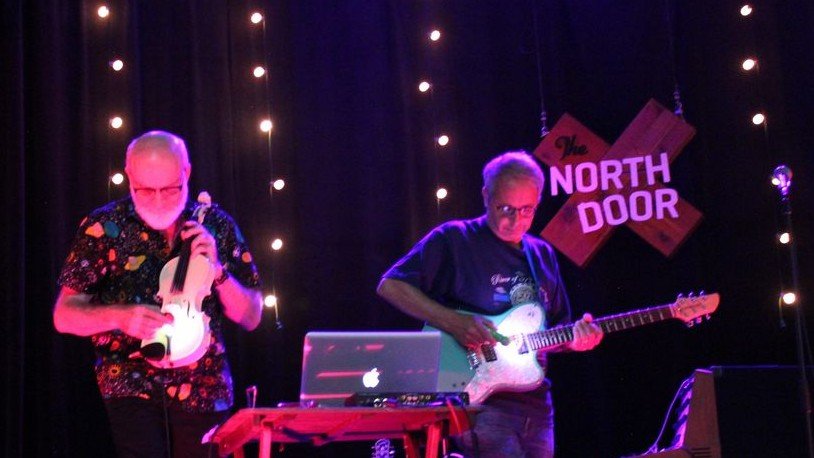
The seeds of Utopia Station were planted during Mayers’s years with the ambient duo Motes Float Aloft, where he collaborated with fellow British musician Nigel Jacobs. Together, they created soundtracks for James Turrell’s UT Skyspace installation and toured venues across Spain.
As 2023 arrived, their musical paths drifted apart slightly, with Mayers becoming increasingly drawn to the tactile qualities of physical instruments. The ambient electric guitar, the harmonium’s bellows-driven tones and the distinctive timbre of the banjo became central to his developing sound.
A Unique Constellation of Sounds
The unexpected pairing of French horn and banjo became one of Utopia Station’s sonic signatures. This combination emerged from Mayers’s experience in the medieval Spanish music ensemble Mundi, where he wrote horn parts for Margaret Ayer.
The collaboration revealed a “fragile grandeur, mixed with pathos” in the relationship between these seemingly disparate instruments. “There was this kinship in sound,” Mayers notes, “kind of siblings who are both very different, but get on well together, and support each other.”
Inspirations
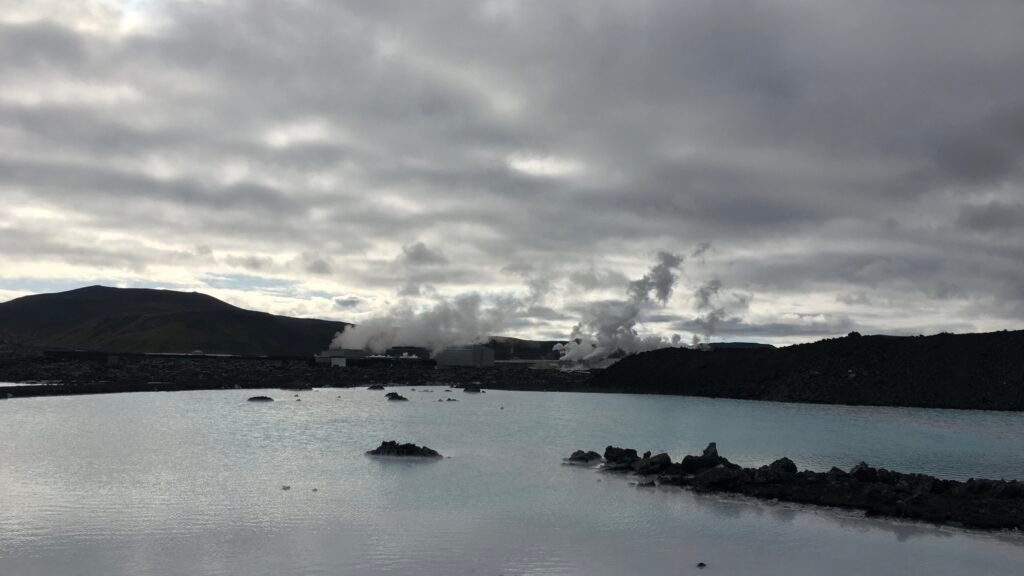
The landscapes of Iceland opened creative doors for Mayers, influencing pieces like “Icelandia,” which culminates in a sonic eruption inspired by the country’s volcanic energy. The aesthetic of Icelandic musicians like Sigur Rós has also shaped elements of his composition approach.
Nature features prominently in Utopia Station’s sound—from the rhythms of Mississippi frogs that influenced “Flora & Fauna” to the calls of crows recorded in a Tokyo park and grackles captured in an Austin grocery store parking lot.
The Journey Ahead
Based in Austin, Texas, Mayers continues to develop Utopia Station as both a recording project and a live performance concept. Each month, he releases a new video collaboration, building a visual counterpart to his distinctive sound world.
Mayers sees Utopia Station as a vessel for musical exploration without boundaries—organic instruments broadcasting from the furthest reaches of imagination.
An Interview with Darrel Mayers
by Pete Leavensworth



Where did Utopia Station come from?
The project came about very organically, as a sort of presentation of old sounding instruments, in a modern, production setting. So you have old harmoniums, banjos, French horns placed in these huge, multi-dimensional spaces. But I should mention that there are also electric guitars and some keyboards.
Prior to this, I was playing electric guitar in an ambient duo called Motes Float Aloft. This was with fellow-Brit Nigel Jacobs, and together we did many things, including a soundtrack for Law Abiding Angels, an annual celebration of visual artist James Turrell at his University of Texas Skyspace, and a mini-tour of Spain. We also hosted a couple of Enoscapes concerts with local ambient artists at the Museum of Human Achievement, and the North Door.
But when 2023 arrived, Nigel dived more into the world of samples and electronica, and I found myself pumping away on a harmonium, or playing my banjo. As this was developing, I realized that I’d come up with something that stood alone, a kind of folky deep space creation. Although it is a new project, in some ways it’s kind of an offshoot of Motes Float Aloft.
The pairing of the French horn and the banjo is original. How did that come about?
I’d been in a group called Mundi, and mostly we were playing either medieval Spanish music, or original music influenced by medieval Spanish music. For the last album I wrote French horn parts, and had the pleasure of working with Margaret Ayer, and toured with her. When she wasn’t playing the horn, she was pumping away valiantly on the harmonium – so in a way Utopia Station sound can be traced to Margaret… its source!
I had also been exploring the banjo, and when I wrote a piece for them both, there was this sort of fragile grandeur, mixed with pathos — a kinship in sound, kind of like siblings who are both very different, but get on well, and support each other.
On “Arrival” there are a few Sigur Rós moments…
Guilty as charged. When I wrote the first guitar part for the title track, I felt like I should ask Jónsi (Sigur Rós singer) to sing over the top. The aesthetic of Iceland and all of its musicians and landscapes definitely opened a creative door for me.
And then there’s “Icelandia’ itself….
Yes — I had been there with my wife, and the films I made from the trip were turned into a video by Nigel, and this was the music that went with it, culminating in a giant, slow motion eruption of the geyser Strokkur.
I enjoyed the groove of “Flora & Fauna.”
Thank you. That started off as rhythms based on some croaking frogs in the Mississippi… but it turned into something very different. Birds took over — some crows I recorded in a park in Tokyo, and some grackles in the parking lot of HEB (Mueller), a grocery store in Austin.
What can you tell me about the cover of your album “Arrival.” Is it the sky? Is it the sea?
I took this photo in Big Bend, a huge national park in West Texas. It was December and it had been snowing. Early one cloudy morning we hiked way up to Emory Peak, and soon found ourselves above the clouds, and in sunshine, and below was this sky? Sea?
I remember someone there was set up on this bumpy, natural rock table, drawing or painting the clouds while listening to Sufjian Stevens. A beautiful, mystical scene. Later, I learned I was looking at a cloud inversion…
What’s next for Utopia Station?
This is all still early days. I am going to be releasing a video each month, and I am working towards a showcase of music and film in the fall – and for this I will be creating a little band. Moving from album to band, rather than the other way around, is going to be new for me, but I am excited about it. Also I am working with Frank Kim, a Korean film-maker – who is creating a video for “Arrival.”